






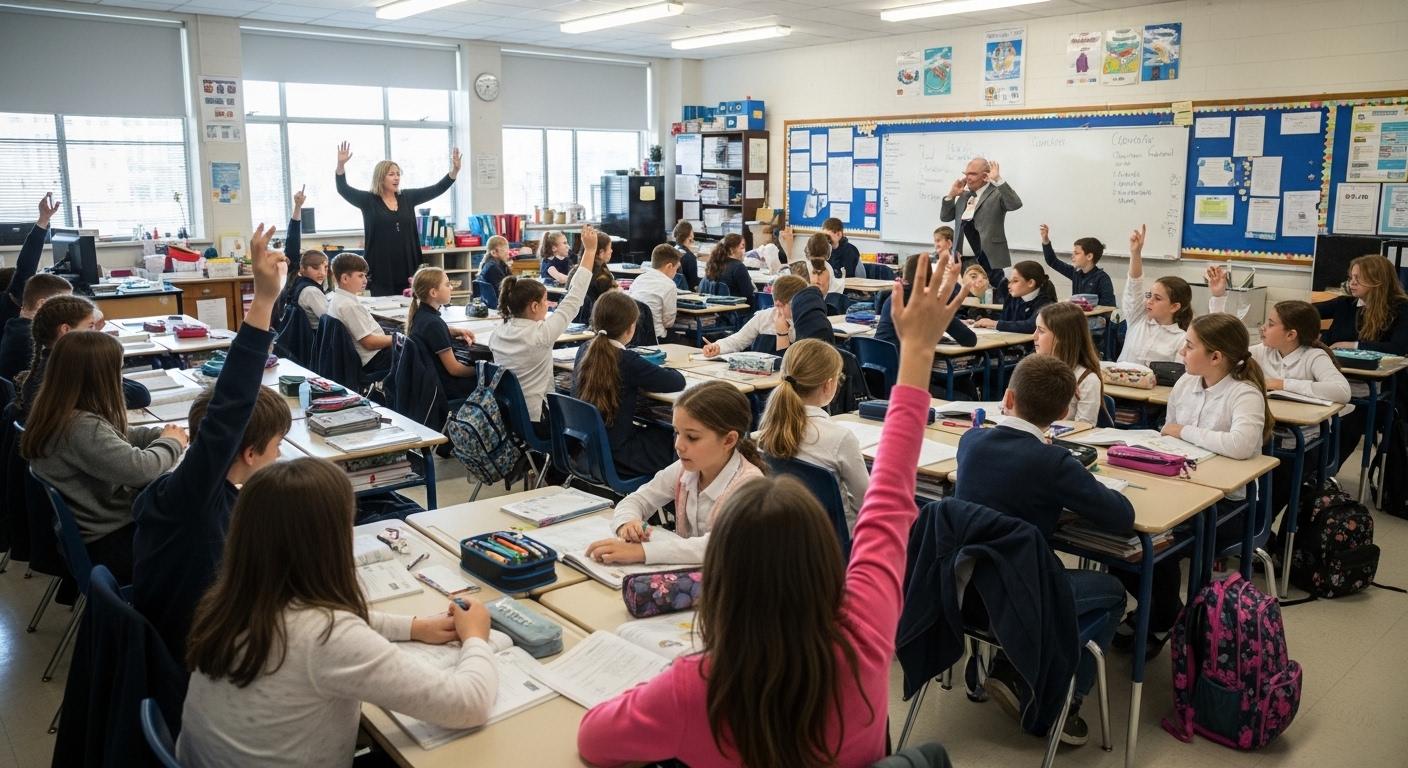
The word spreads like a whisper down the corridors: more students crammed into one room again, not enough chairs, the teacher sighs after attendance. Everyone senses the suffocation when too many heads struggle for attention. No one escapes untouched—students carry the fatigue, teachers wear the stress, families see it in test scores and household moods. This question needs facing head on: when classrooms spill over, what comes next for learning and those expected to lead it?
Also to discover : Stunning apartment for sale in nice, france : explore today !
The Standard and Reality of Classroom Overcrowding
Numbers float around the teacher’s lounge and school board meetings. The “optimal” headcount, they say—18 in the lower grades, 22 or so for the middle years, perhaps 25 if lessons grow longer and teens more resilient. Reports stack up. In the United States, the National Center for Education Statistics gently recommends such figures, but walking into a Chicago classroom or a bustling floor in Tokyo, one senses the tidy arithmetic rarely translates. Where Norway appreciates smaller learning circles, maybe sixteen at a time, and Delhi’s schools creep toward forty-five, no system resembles another, yet the label ‘overcrowded’ returns as soon as thirty students fill one lesson. Across France, some rural rooms stretch to only twenty-one, while American fifth-grade classes sometimes pack in thirty-two. Nothing fits the rulebooks and reality remains stubborn: policy grants suggestions but daily life writes its own rules. Effective strategies to reduce classroom overcrowding demand both immediate adaptation and sustained commitment from every stakeholder.
In parallel : How to improve website seo: boost your online presence today
The Spread of Overcrowded Classes
| Region | % Classes Over 30 Students | Typical Overcrowded Grade | Trend (2026) |
|---|---|---|---|
| Urban U.S. | 41% | Grade 3–5 | Rising |
| London, UK | 53% | Grade 7–8 | Stable |
| Mumbai, India | 66% | Grade 1–6 | Rising |
| Suburban France | 14% | Grade 10–12 | Slow decline |
Look at the numbers—not as mere percentages, but as tension accumulating in every child’s day. The urban world swells with students every year; Los Angeles, Mumbai, even London absorb more young people than their buildings permit. Rural isolation offers some relief for now, but what happens when a local industry closes or opens, turning the peaceful class of twenty-two into thirty-five overnight? Decisions made by distance rarely suit the sudden neighborhood influx; new construction always lags behind need. Classrooms rearrange desk by desk, yet the result remains the same—too many, too close, too often.
The Forces Behind Classroom Overcrowding
No district escapes the tug and pull of funding or policy fits and starts. Resources flow, then wither without warning. Some cities depend on property taxes—North Side schools lure smaller classes while South Side squeezes every resource into crumbling rooms. State money shifts the balance, but even generous budgets stretch thin under spiking enrollment. Federal conditions arrive with fanfare, but exceptions and loopholes always sneak in. In 2026, last year’s reform bill whispered promises of relief, but execution crawls and high-poverty schools still carry the heaviest burdens.
The Effects of Urban Growth and Demographics
| City | Population Growth Rate | Change in Avg. Class Size (2022–26) |
|---|---|---|
| San Antonio, TX | +12.9% | +5.2 students |
| Toronto, Canada | +6.8% | +3.8 students |
| Bangalore, India | +15.1% | +8.3 students |
| Berlin, Germany | +4.4% | +0.7 students |
Population booms inspire urgency: Atlanta balloons, Bangalore scrambles, and Toronto plans feverishly to catch up. Families settle in new subdivisions outside the city, schools run double sessions, and administrators chase last year’s projections that already feel out of date.
Fresh faces pour in, schools built for three hundred creak under four hundred and fifty, and teachers arrange tables daily to wedge one more child into the narrow rectangle at the window.
No blueprint survives contact with a migration surge; every burst challenges already strained systems.
The Teacher Shortage Trap
Recruiters circulate job posts, yet the silence echoes in the staff room. Between 2022 and 2026, major city teaching jobs, especially in STEM, linger unfilled three times longer than before. Florida counts over seven thousand vacant positions, California doubles that, the stories spread. Retirements spike, reputations of frustration filter down to new graduates, and trainees quietly step aside after observing lesson chaos. Teachers who persevere absorb bigger classes; few hands stretch for the dwindling teaching pool. Over time, this drought in applicants compounds: less individual instruction, more overlooked needs, a widening distance between expectation and reality. The endless search discourages both the old guard and the newest cohort—those who stay, endure rising headcounts with fewer resources.
The Consequences for Student Learning
No need for suspense. Standardized tests measure the result: higher headcounts mean lower scores. Everyone whispers it, research confirms: reading and math slip twelve percent once classrooms tip past twenty-eight children. Students become invisible amid the numbers, quieter children drift unnoticed, hands stay down, eyes wander. Science and mathematics lessons, where tailored help matters, especially suffer when feedback becomes rushed and group work splinters. Academic gaps widen year after year; basic concepts fade, and once those slip away, few recover them later.
The Influence on Wellbeing and Engagement
No one sleeps well in overcrowded classes. Noise ricochets, stress grows, and behavioral sparks ignite faster. Pediatric psychologists in 2026 report more anxiety for students surrounded by more than thirty classmates each day. Fewer direct interactions, shallow relationships between teachers and students: trust wears thin, motivation dries up. Disciplinary calls rise, absences tick upward, and in every crowded room, fatigue turns into a low hum.
The Widening Gaps Left by Crowding
The blunt fact remains: swelling class sizes punish most those already teetering. Children who struggle with reading, those learning English, or who need extra focus, lose support quickest. Recent federal data show referrals for learning support double in the most cramped schools while positive academic outcomes plunge by half. Vulnerable children risk falling through the cracks; the divide grows sharper each year. Larger groups foster inequality—classroom overcrowding accelerates the split between those with support and those lost in the crowd.
The Impact on Teachers: Performance and Wellbeing
The first sight: stacks of homework barely budge as bells ring. Teachers trade breaks for quick strategy sessions or parent emails. Each new student pushes the workload higher, personal feedback gets squeezed, pride gets dented when teachers pass the year unsure who sat in the fourth row.
The Push Toward Burnout
Half of Chicago’s teachers in overcrowded classes report skipping family time, friends’ invites, or even personal errands, exhaustion forces sacrifices. No more flexibility, no room for creative feedback—each new face means minutes shaved from lesson planning. Some confess to barely recalling names by spring; others admit that fatigue now trumps enthusiasm. The emotional cost lingers: motivation sours and burnout stares back from the mirror.
The Squeeze on Quality Teaching
Shrunken lesson plans, worksheets replace experiments, creativity bowed out by midterm. Overcrowded rooms trigger more rules, fewer inspiring activities, and discipline wars that fill entire afternoons. Classes in Los Angeles and Mumbai fill every chair, yet hands-on projects, those moments that ignite a mind, dwindle for want of space and time. The spark dims for teachers and learners alike; teaching quality buckles under crowd pressure.
The Cycle of Teacher Turnover
The math tells its own story. Nearly five times more teachers leave crowded classrooms by the two-year mark compared to those with manageable numbers. Administrators in Long Beach watch staff turnover become routine; investment in training evaporates as soon as thirty-two children show up for roll call. New teachers enter full of hope, exhaustion replaces it, veteran teachers retire sooner than planned, everyone feels the churn.
Sarah, a fourth-grade teacher in Philadelphia, offers her story: Twenty-two years teaching, but last autumn, thirty-four children filled her classroom; fatigue grew visible, lessons narrowed, and her message to the principal rang clear: ‘I teach faces, not numbers’. The year almost broke her spirit, catching the exhausting rhythm that far too many know well.
The Pathways to Change: Tackling Classroom Overcrowding
Administrators adapt with creative urgency. One week modular rooms appear in a corner, the next, library stacks shift for temporary desks, schedules split morning from afternoon, teaching aides get hired thanks to a last-minute grant. Bulletins announce team teaching, squeezing the adult-to-student ratio when specialists appear. None of these changes reshapes the horizon for long, but each pause in pressure feels precious.
- Portable learning spaces buy breathing room
- Alternate schedules reduce crowd peaks
- Teaching assistants lighten the load
- Paired teaching increases adult presence
The Long Haul: Policy, Infrastructure, Advocacy
| Initiative | Description | Expected Impact |
|---|---|---|
| Increased education funding | Boosts teacher hiring and training budgets | Sustained class size reductions |
| New school construction | Builds physical capacity in high-growth districts | Greater student accommodation |
| Class size policy reform | Enforces lower caps through legislation | Uniform improvement in learning environments |
No reform gains ground without investment. Toronto’s five-year expansion campaign, begun in 2021, trims average class groups to below twenty and cuts crowding by more than half. Where statutes strictly bind classroom enrollment, gains reach every corner. Ambition matters: when local and national leaders insist, when funds not only appear but stay in place, schools transform across the city. Promises yield results only if champions persist year after year.
The Community’s Lever: Parents, Business, Neighborhoods
Local coalitions arise. Parents gather signatures, confronting the school board, spotlighting the day-by-day pressure facing staff and students alike. Companies supply funds, furniture, even fresh portable rooms. Recent activism in Atlanta and Austin prompts rapid acceleration of new educational projects in 2026. Neighborhood meetings spar, but sometimes unite long enough to shift municipal priorities. Once families align their determination, stone and budget and curriculum bend to meet the need.
Nothing about overfilled classes resolves itself quietly. Students, teachers, families—everyone stands to benefit from determined collective solutions. Why wait? The next school year will come, desk by desk; the courage for lasting change already exists wherever advocates, leaders, and teachers gather the will.